The Data Center Next Door
How Environmental Justice Organizers in the Midwest are Standing Up to Big Tech and Fighting for their Communities
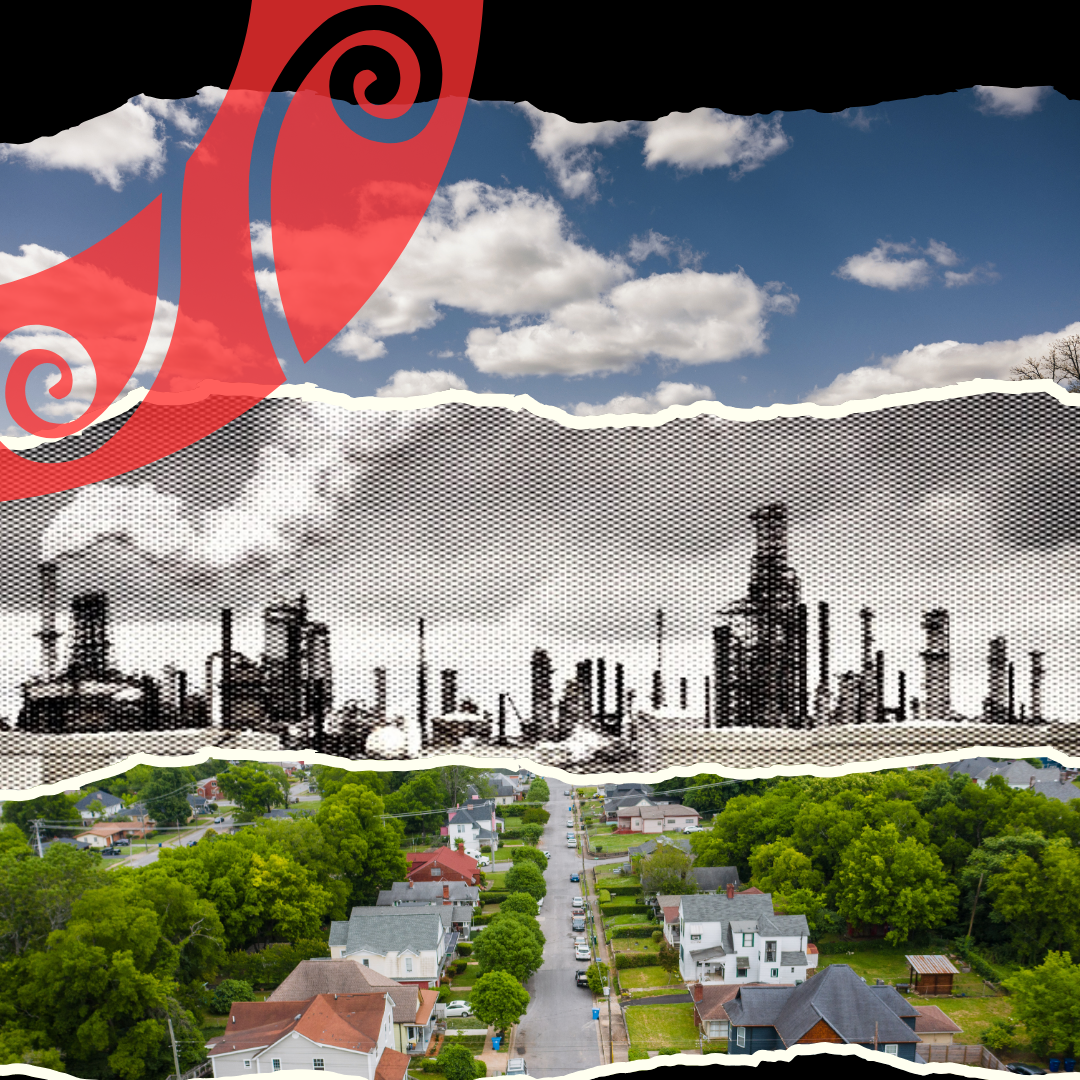
The chances of a data center being built in your backyard may be higher than you may expect.
Of the roughly 11,000 data centers worldwide, nearly 40% are being built in the United States. Tech giants like Google, Amazon, Microsoft, and Meta have invested billions of dollars to build data centers on thousands of acres of land across the county as data processing infrastructure has moved from niche to necessity in public discourse. Artificial intelligence, cloud services, military and government operations that depend on data centers have all driven national demand in recent years, but the “Data Center/AI Boom” was set off when President Biden signed an Executive Order in 2025. This boom has continued throughout Trump’s second term as the U.S. enters a global “Data Center Race.”
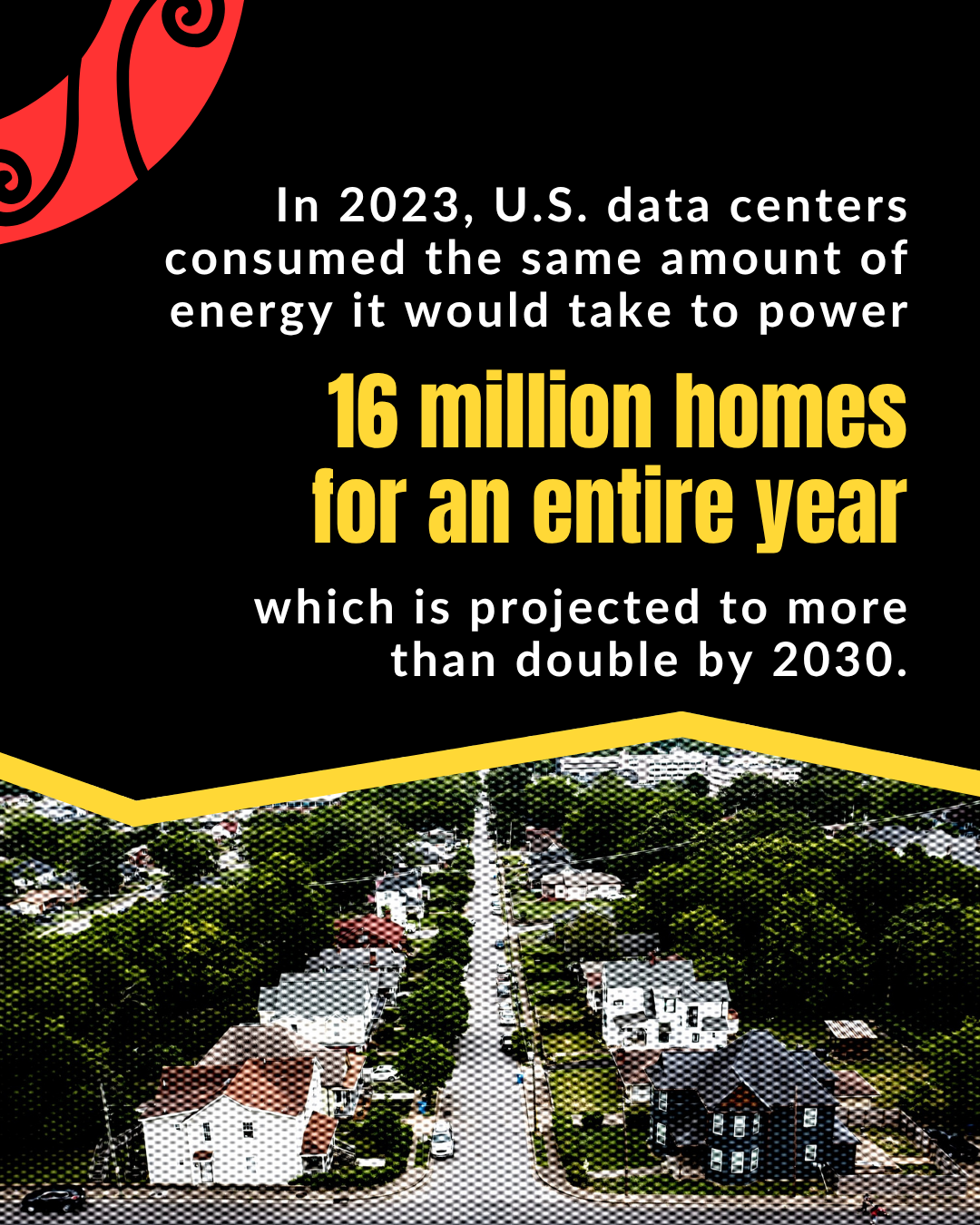
When a data center comes to town, there’s a lengthy, formidable list of hidden and not-so-hidden costs that follow. Some of the biggest costs are energy usage, water consumption, and public knowledge. Data centers demand and consume immense amounts of electricity. In 2023, U.S. data centers consumed the same amount of energy it would take to power 16 million homes for an entire year, which is projected to more than double by 2030. As data centers strain local power grids, utility companies are often prompted to build new power infrastructure, which can often increase consumer utility costs and snowball utility costs for customers. As companies scramble to find enough energy to power data center infrastructure, many have turned towards natural gas as an energy source, borrowing from our futures with new sources of large-scale fossil fuel reliance. Similar cost concerns exist with water consumption–average hyperscale data centers can consume enough water to supply a city of 10,000-50,000 people. Many communities are rightly concerned about the impact that this may have on local water supply, and where the water will go after usage. The proposed solution from data center developers has been the closed-loop water system which reuses water for cooling purposes–but this method has its own fallacies, and still requires significant amounts of water, and still increases local energy demand.
Among these environmentally-threatening issues, there is a lack of transparency between data center developers and the surrounding communities, keeping accurate information about these facilities in the dark. Trust in local governments is declining as some city officials are signing nondisclosure agreements (NDAs), obscuring the identity of the data center’s owner and how much water or power it will use. This lack of public information around the infrastructure projects make an objective assessment of potential impacts on local communities functionally impossible. Combined with a nationwide gap in state legislation to protect communities against the environmental and financial harms of data centers, this has created a “black box” of political accountability around data center construction nationwide.
Despite all of this, data center developers claim that these projects are beneficial to local communities, yet public experiences have demonstrated the opposite. “Our soil’s turning toxic, our river’s running dry—all for someone else’s cloud storage,” said Michigan resident Kathryn Haushalter of the Stargate Project in Saline Township. Horror stories like these have led to a national outcry to pause construction or shutdown these facilities. The playbook used by tech giants to strong-arm data center construction projects into communities across the country is new and alarming to many. But for many environmental justice activists, it’s a game they’ve seen before: corporations banking on vulnerable communities for fast-tracking environmentally unsafe projects through to completion.
The Midwest has become an epicenter for data centers in the last year–with approximately 1000 campuses planned in the region. Tech companies have been eyeing the region for lower costs in comparison to coastal markets, local and municipal tax incentives and breaks that expedite data center permitting processes, and access to large parcels of industrial-zoned land. One of the biggest misconceptions that has also fueled this interest from data center developers is the belief that there is an infinite water supply in our region. Even with an abundance of water from the Great Lakes and seasonal rain and snowfall, data center expansions on this scale can fast track the Midwest to water supply shortages and excessive contamination. Ultimately, these facilities are reshaping communities, straining fragile ecosystems and forcing states to rethink energyand water policies. Many companies have lured public interest with the promise of job prospects from data center projects. But communities in the Midwest are no stranger to what happens when big corporations make economic promises they don't intend to keep, and know all too well the environmental harms that come after corporations leave communities.
What big tech companies haven’t been banking on is the power of grassroots organizing, and the history of local communities in the region fighting back against runaway corporate development. Environmental justice activists in the Midwest have been leading this charge, using the knowledge they have curated over decades to push back on data centers. They are using organizing methods that blend land, water, and energy justice to understand the ways democracy is being threatened in addition to how AI is being used and the institutions supporting them. EJ advocates are asking the crucial questions of data centers, demanding to know who has access to information, how these projects are being sited, what their purpose is, and who has a say over them.
Here are three snapshots of local stories of resistance against runaway data center expansion from our MWEJ Network partners–
Northwest Indiana
Last year, Just Transition Northwest Indiana (JTNWI) launched a campaign to address the data centers targeting Northwest Indiana. Now, they are mobilizing with residents across the region in a campaign called “Communities, not Big Tech, Come First.” Northwest Indiana is one of the fastest growing data center hubs in the Midwest and accounts for a majority of the state’s data centers, adding to the region’s already significant burden due to the sprawl of polluting industries. A major reason Indiana is being targeted is the subsidies that they offer to incoming facilities. Two of the major subsidies are the “Indiana Data Center Tax Incentive Act,” and the “Quantum Research Tax Incentives.” Subsidies like these have attracted the likes of Amazon, whose sprawling campus in New Carlisle occupies 1,200 acres and consumes 2.2 gigawatts of energy, and is poised to become one of the largest data centers in the world. Among all of this, Hoosiers persist and resist and have been successful in canceling or delaying more than $162 billion in data center development simply from community opposition.
Chicago
Several miles down the road Chicago is being eyed as a key market by tech giants. The city now has over 200 data centers, and the South Side of will house America’s largest quantum computer, named the Illinois Quantum and Microelectronics Park. Quantum computers allow calculations to be performed at vastly greater speeds than current devices, and has been classified as one of the “next big investments,” giving this project a sense of urgency. The big question here is: is our infrastructure and earth ready? The short and most reasonable answer is no. Chicago-based partner People for Community Recovery (PCR) has a campaign directly related to this mega data center, and has been working on a statewide data center bill to address affordability, water and other environmental justice issues related to data centers in Illinois.
Southeast Michigan
Data center developers have been attracted to the Great Lake state for its tax incentives and opportunity to develop ground-breaking advancements in the data center boom. The University of Michigan and Los Alamos National Laboratory partnered to construct a $1.2 billion computing facility in Ypsilanti where their primary research will be on nuclear weapons. This has caught the attention of MWEJN partner orgs like Citizens’ Resistance At Fermi Two (CRAFT) whose main focus is shutting down a dangerous and faulty nuclear reactor that puts our health and Great Lakes at risk. The data center boom has become a priority for CRAFT as Michigan plans to reopen nuclear plants to power data centers, going against everything the organization is working towards. Another partner organization that is shedding light on data centers is Michigan Environmental Justice Coalition (MEJC), they are actively hosting and participating in various events to bring the community together to discuss the harms of data centers and what they are going to do about it.
“What big tech companies haven’t been banking on is the power of grassroots organizing, and the history of local communities in the region fighting back against runaway corporate development. ”
This movement has only just begun and there is still time to halt the data center boom. Grassroots resistance is happening all over the nation, with nearly half of the proposed data centers planned for 2026 canceled or delayed due to community pushback. In the Midwest, a coalition of rural and urban communities are pushing back on this development—and environmental justice leaders are well equipped with generations of knowledge on how to resist the tired corporate tactics that tech companies are using for data center development.
The AI-fueled data center boom is not inevitable—it is only as inevitable as we allow it to be.