
The Place We Call Home
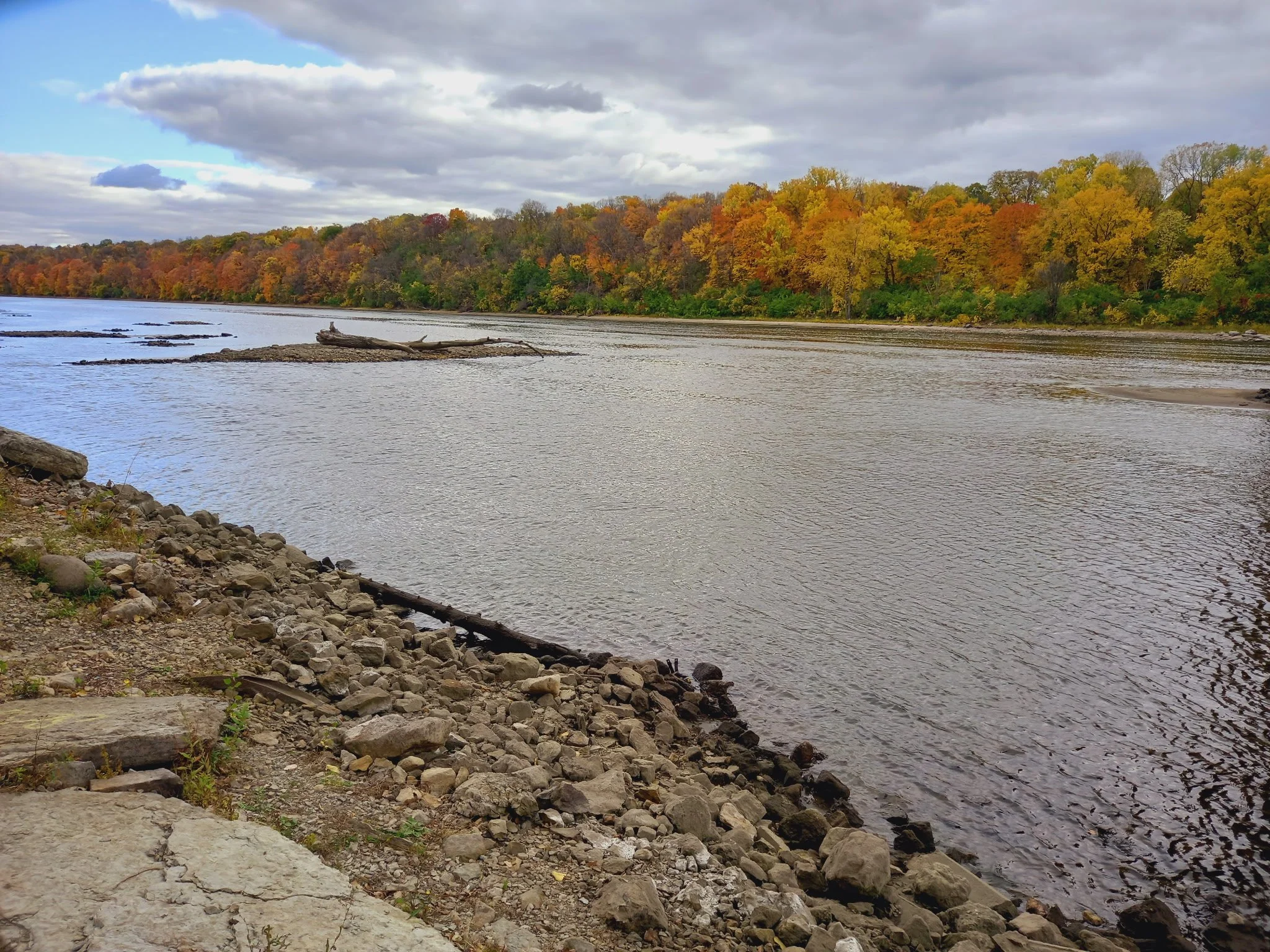
The author’s photo of the Mississippi River, taken in Minneapolis—a place they now call home.
Dear Midwest Environmental Justice Network,
For much of my life, I felt unrooted. My family immigrated to rural Minnesota to work on a small dairy farm from Russia when I was only five years old. The world that I had known and loved had vanished in what felt like a moment, and left me with a profound sense of loss. Since then, I have struggled with the question: What does it mean to call a place home?
The Midwest Environmental Justice Network and University of Michigan’s Tishman Midwest Climate Catalyst Fellows program helped me solve a piece of this puzzle.
Coming into my Master’s program as a Midwest Climate Catalyst fellow at the University of Michigan Tishman Center for Social and Environmental Justice, I wanted to learn more about the environmental justice movement. It was one of few places in environmental spaces that deeply cares about creating a more just world. It was important for me to understand the systemic underpinnings of environmental injustice because I did not see my or my family’s lived experiences with being a low-income household reflected in solutions of traditional environmental spaces. People rarely spoke about the environmental injustice of poverty. How will my single mom, who was working for minimum wage in a hog farm, ever be able to access these green spaces, environmental education, and community engagement events that were held mid-day during the work day of working class people? How would single moms, working class people, immigrants, ever be able to access services that did not have them in mind at all? Furthermore, how will people be able to connect with the environment, if they barely have enough money to afford housing, buy food, gas, and other necessities. I did not find answers to these questions in traditional environmental spaces and I found very few people who were asking them. I knew I had to look deeper to find what I was looking for. Coming into my Master’s program at the University of Michigan, I wanted to know–what does it take to actually create the world we dream of? What do solutions to environmental injustice actually look like?
When I was placed with the Midwest Environmental Justice Network as part of the Tishman Center’s community research partnerships, the pieces began to fall into place.
At MWEJN, I first worked on the Thriving Communities Grant Making program with Anthena Gore. As I read through all of the amazing projects that needed funding, it solidified in my mind how important stable financial investment into Environmental Justice truly was This prompted me to further explore the relationship between ‘resources’ and the Environmental Justice Movement in the Midwest and its visions of the future.
Exploring the literature on Resource Movement Theory helped me understand that movements need resources to enact solutions. But it is also true that resources themselves are a product of disrupted relationships between people and land. Systems of capitalism and settler colonialism disrupted relationships– exchanges of labor, gifts, and care that were based on trust, respect and consent– and recodified them into resources that can be bought and sold. The environmental justice movement does the opposite, it puts relationships first and fights to regain extracted resources and recodify them back into relationships.
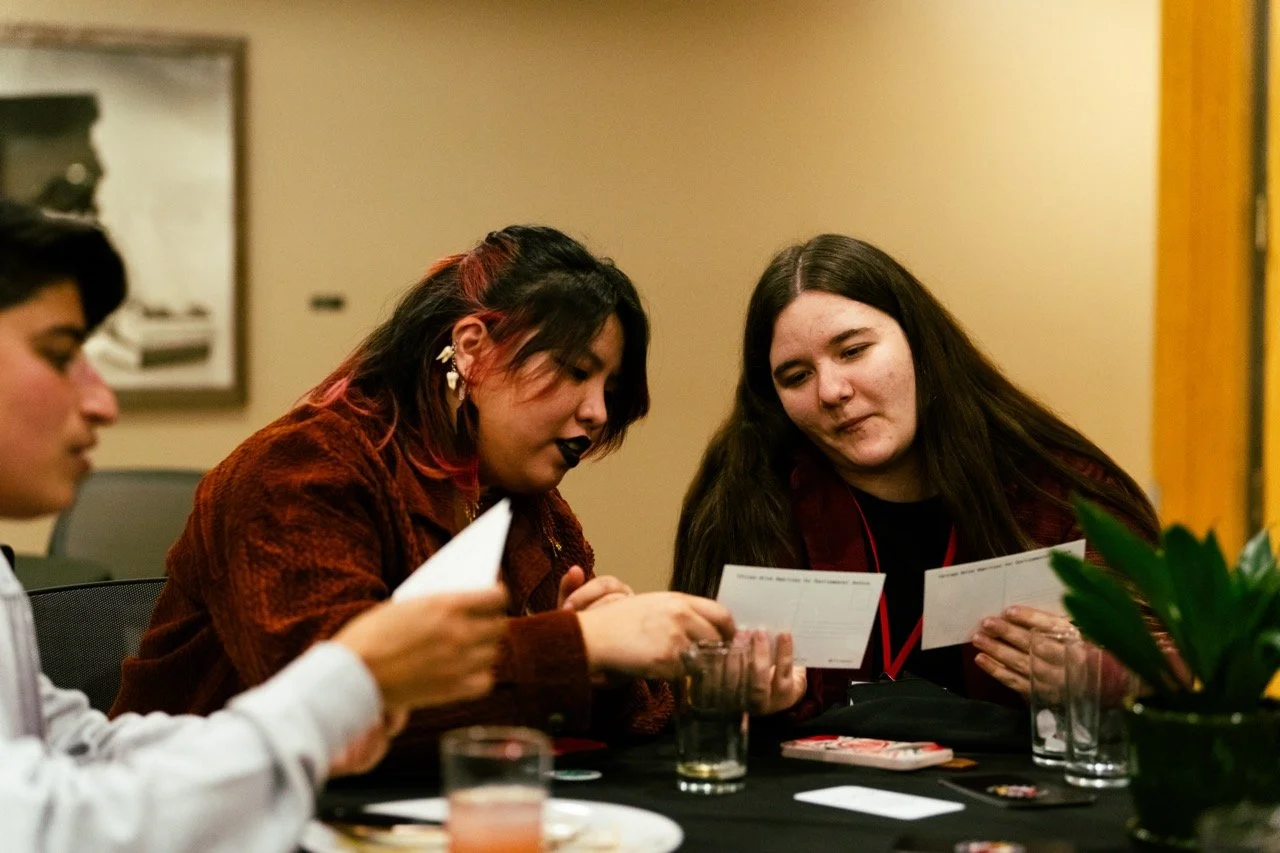
Sofia Ledeneva (right) at the 2025 MWEJN Gathering.
This process of restoring and nurturing relationships has been front and center in the work I’ve seen the network do, especially during the MWEJN Gathering. Each piece of the Gathering was thought through with the utmost care, from the catering, to the somatic healing workshop, to the gift bags sourced from partner-organizations, to the breakouts on Midwest strategies and on hope. Your stories showed me the ways that you are restoring relationships with people in your communities, with the land, the water, food systems, and many more. I had the honor of interviewing Lilias Jarding from Black Hills Clean Water Alliance. My interaction with her really stands out in my mind. She lived in South Dakota for the majority of her life and has been fighting against mining since her 20s. I lived in South Dakota for seven years and had never once spoken to a person who had information on the history of environmental justice while I was there. But it was at this Gathering that I got to meet her, and she told me so much about a place that I thought I knew.
The Gathering for me, really drove home the idea that this movement is about place. And that my place is the Midwest, and the landscapes, and the people in it. I remember looking at the map of all of the work people are doing in our region, and thinking, how special and rare it is for all of us to share this time, this place, and this mission of environmental justice.
The conclusion that I have come to at the end of this journey is that Environmental Justice groups lead with relationships, and resources are a tool to expand relationships. For my final project titled, How Money Moves the Movement: A Look at How Funding to Values-Aligned Environmental Justice Organizations Influences Their Ability to Implement Jemez Principles of Democratic Organizing, the resource I focused on was money. And while it is clear that money can come with certain risks, the environmental justice movement has been strategizing around such risks for a long time. The strength of the environmental justice movement has always been in our relationships to each other and our places, the relational values we lead with, and the solutions that we create together. This is how the environmental justice movement builds and honors home.
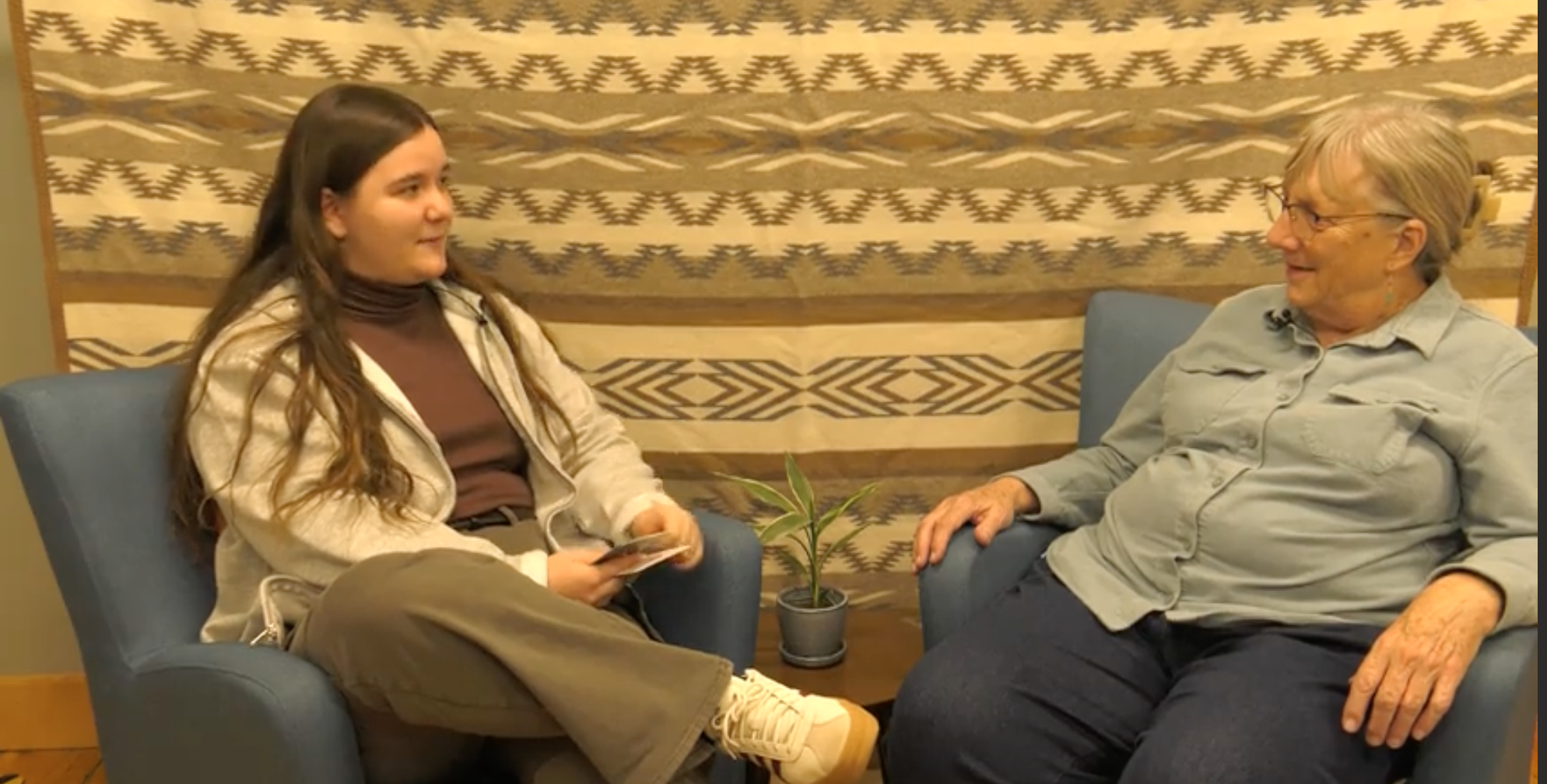
Sofia Ledeneva (right) interviews Lilias Jarding (left), Executive Director of the Black Hills Clean Water Alliance at the 2025 MWEJN Gathering
My next journey will be back to Minneapolis, Minnesota to work with an organization called Our Streets that I was placed with through the Yale Environmental Fellows Program led by Dr. Dorceta Taylor. Our Streets works on transportation justice in Minneapolis, by creating walkable, bikeable cities. I am excited to work with an organization that co-creates solutions and policy with people most impacted by unjust transportation systems. I am especially grateful to return back to Minnesota and continue contributing to environmental justice in the Midwest.
Grace Lee Boggs said “You cannot change any society unless you take responsibility for it, unless you see yourself as belonging to it and responsible for changing it.” Coming out of this experience, I now know that home has been under my feet all along and can confidently take on the responsibility and joy of being a Midwesterner and co-creating this Midwestern home with you.
Thank you for all of your care and support,
Sofia Ledeneva
